2026-10-21 ·
How Winter Rain Affects Dryer Performance in Redwood City Homes
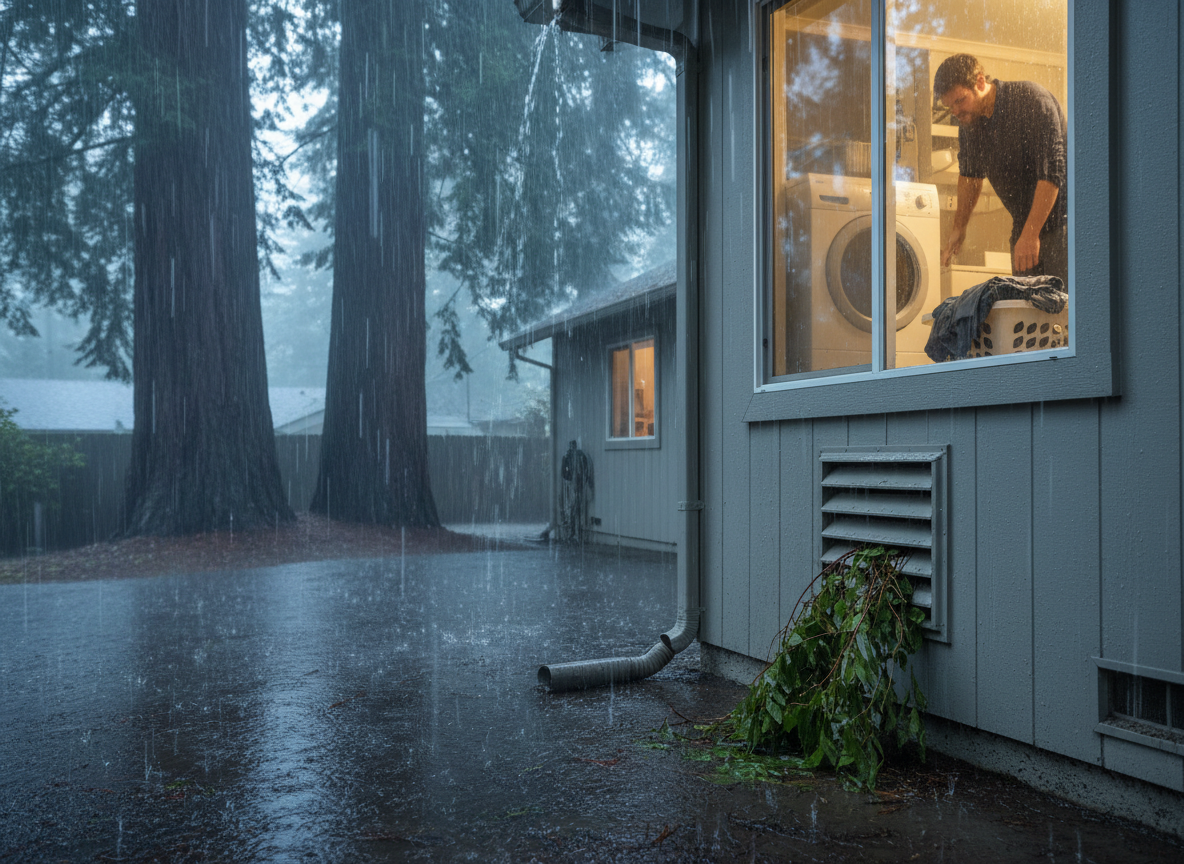
Winter rain in Redwood City lengthens dryer cycles and reduces efficiency because higher outdoor humidity slows moisture removal from clothes. The effect shows up most in homes built before the 1980s where dryer vents run long distances or terminate near ground level.
Humidity Changes During Redwood City Winters
Redwood City’s mild Mediterranean climate brings steady winter rainfall that keeps relative humidity elevated for days at a time. This extra moisture in the intake air forces the dryer to evaporate more water before clothes feel dry. In neighborhoods such as North Fair Oaks and Edgewood, many single-story homes have dryer exhaust ducts that travel through unconditioned attics or crawl spaces, allowing the humid air to cool and condense inside the line. The result is reduced airflow and longer run times. Residents near Redwood Shores Lagoon notice the same pattern because the water body adds local moisture even on days without direct rain. Proper exterior vent hoods with functioning flaps help, yet many older installations in Woodside Plaza still lack them.
How Local Housing Stock Affects Dryer Venting
Redwood City contains a wide mix of housing ages that directly changes how winter rain interacts with dryers. Homes in Downtown Redwood City and North Fair Oaks often feature 30- to 50-foot vent runs with multiple elbows, which already restrict airflow before humidity rises. Newer construction in Redwood Shores tends toward shorter, straighter runs, yet even these can collect lint faster when outdoor air stays damp. Cañada College area homes sit on sloped lots where vents sometimes exit into prevailing wind patterns that push rain against the termination, allowing water to enter the duct. Each of these conditions increases static pressure and forces the dryer motor to work harder during the wet months.
Practical Effects on Cycle Length and Energy Use
When winter rains arrive, homeowners commonly report that a normal 45-minute load now takes 60 to 75 minutes. The extra time stems from slower evaporation rather than any change in the dryer itself. Higher humidity also leaves residual moisture in the lint filter and duct, which can lead to musty odors if the system sits idle between loads. In San Mateo County, where many households run dryers daily, this added runtime increases electricity use noticeably during December through February. Checking the vent termination after each storm and clearing any debris prevents water from pooling inside the line and compounding the problem.
When to Schedule dryer repair in Redwood City
Persistent longer cycles, clothes that remain damp at the end of a run, or a burning smell during operation all point to restricted venting worsened by seasonal humidity. A technician can measure actual airflow at the exterior hood and locate hidden lint buildup or crushed sections that standard homeowner checks miss. For households in Belmont or Menlo Park that share the same weather patterns, the same inspection steps apply. Addressing these issues before the next rainy season prevents premature element or motor failure.
Related Laundry Concerns in San Mateo County Homes
Dryer performance ties directly to washer habits, especially in front-load models common in Redwood City remodels. Excess water left in clothes from incomplete spin cycles adds to the load the dryer must handle when humidity is already high. Homeowners tracking repair costs can review typical expenses for front-load washer issues to decide whether an older machine is worth keeping through another wet winter. Keeping both machines in good condition reduces the combined impact of seasonal moisture on the entire laundry setup.